THOUGHTFULLY CREATED IN THAILAND✦NATURE. SCIENCE. EVERYDAY CARE.
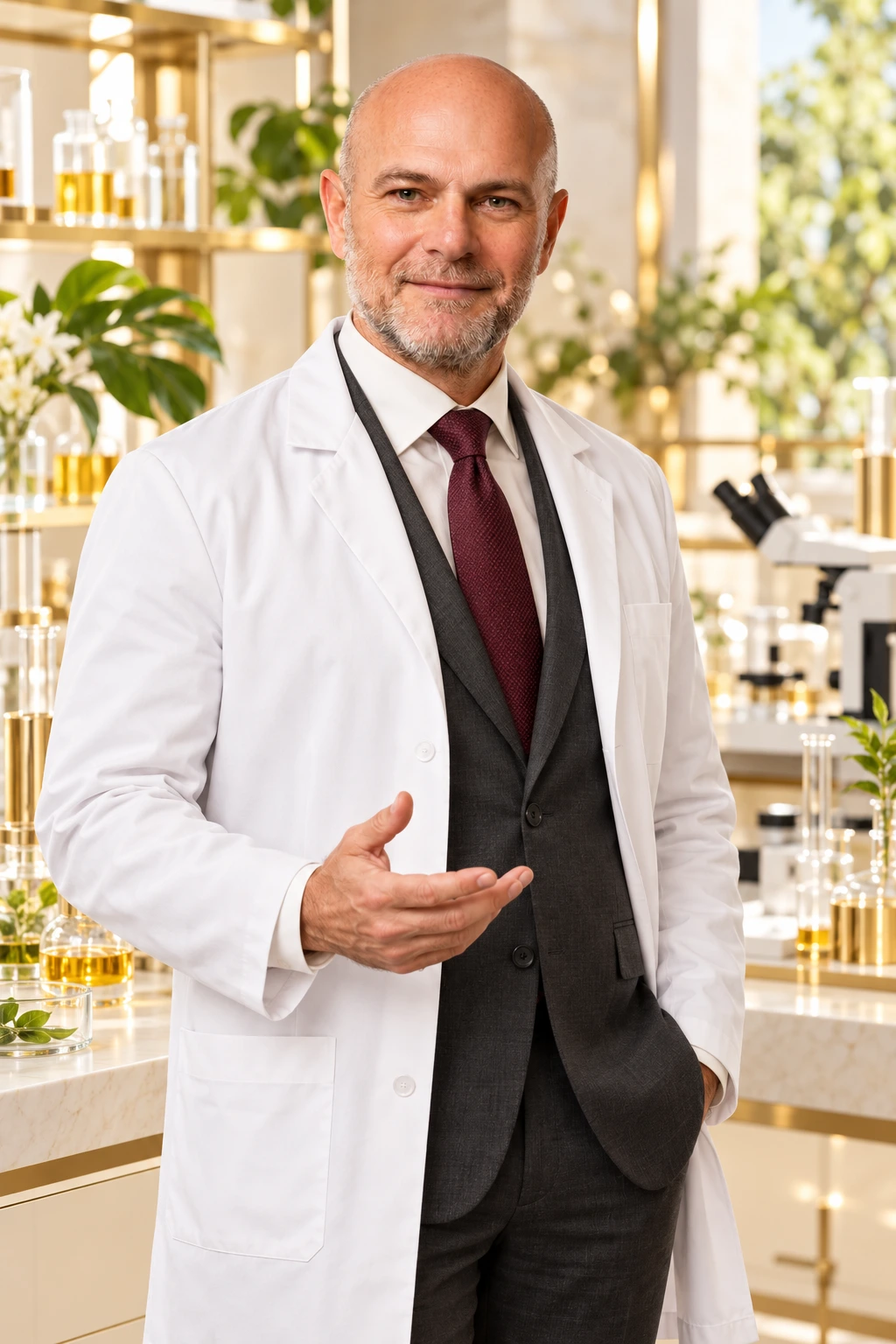
IDO ECO OFEK, GLOW company scientist, in a white laboratory coat over a tailored suit
IDO ECO OFEK · Company scientist
THE SCIENCE OF GLOW

Key ingredients.
A considered role.

Meet IDO ECO OFEK, our company scientist, and explore the thinking behind GLOW’s serum, cream and balm. From hydration to texture, every component has a part to play.

Understand your skincare.

Discover what each ingredient does, how the three formulas differ and where the published research begins. Clear explanations, with the original studies one click away.

HOW A FORMULA COMES TOGETHER

Hydration. Texture.
Everyday comfort.

Water-binding care

Humectants such as sodium hyaluronate, panthenol and butylene glycol help attract moisture. They support a supple feel in our water-based serum and cream.

Lipid-rich softness

Emollient oils soften the skin surface. The cream combines water and oils; the balm uses a water-free lipid base for a richer, more protective-feeling finish.

A stable, elegant texture

Emulsifiers, gel builders and pH adjusters support a consistent product. They help shape the texture, spreadability and everyday experience of the formula.

TWO INGREDIENTS WORTH KNOWING

Skin comfort.
Botanical depth.

HORIZON CREAM + GLOW SKINCARE BALM

PEA · Palmitoylethanolamide

PEA is a lipid mediator studied for anti-inflammatory activity. Experimental research links its action to PPAR-α, a receptor that helps regulate inflammatory signaling. This provides a scientific foundation for interest in PEA as a skin-comfort ingredient.

Explore the PEA mechanism ↗Read the PEA review ↗

HORIZON CREAM + GLOW SKINCARE BALM

Rice bran oil & γ-oryzanol

Rice bran oil brings softening plant lipids and naturally occurring γ-oryzanol. This group of ferulate esters has shown antioxidant activity in laboratory studies, helping interrupt lipid oxidation. It adds another dimension to the scientific interest in rice-derived skincare ingredients.

Explore γ-oryzanol research ↗
EXTRACTS, AROMATIC OILS & PLANT WAX

Nature,
in the details.

Plant extracts, aromatic oils and structuring lipids each bring something different. Here is how they fit into our formulas, with the type of evidence made clear.

HORIZON DROPS SERUM

Gardenia & crocin

Gardenia fruit extract gives the serum its botanical pigment. Crocin is a carotenoid pigment associated with gardenia. In laboratory models, isolated crocin showed antioxidant activity, limited squalene oxidation and influenced inflammatory signaling in cultured skin cells. These findings concern crocin rather than the complete serum.

Read the research ↗

GLOW SKINCARE BALM

Plantago major

This botanical extract complements the balm’s conditioning oils. Plantago major extracts contain polyphenols such as plantamajoside and have shown antioxidant activity in laboratory assays. Separate experiments using isolated pig skin examined tissue-repair processes. Extract composition varies with the plant material and extraction method.

Read the research ↗

GLOW SKINCARE BALM

Lavender

Lavender oil brings a soft floral aroma to the balm. A study in rats examined collagen formation and the repair-related signal TGF-β after topical application. This early research helps explain scientific interest in lavender, while its role here includes the aromatic experience of the finished blend.

Read the research ↗

GLOW SKINCARE BALM

Helichrysum

Helichrysum flower oil adds an aromatic botanical note. In a cultured human skin-fibroblast model, the tested oil altered proteins involved in tissue remodeling. This is preliminary cell research, useful for understanding biological activity alongside the oil’s sensory role in our balm.

Read the research ↗

GLOW SKINCARE BALM

Cypress

Cypress oil contributes a fresh, woody aroma. Laboratory research on Cupressus sempervirens oil has examined radical-scavenging activity and inhibition of 5-LOX, an enzyme involved in inflammatory pathways. These are laboratory mechanisms; the oil also helps shape the balm’s distinctive aromatic blend.

Read the research ↗

GLOW SKINCARE BALM

Soy wax & moisture

Hydrogenated soybean oil is a plant-derived, wax-like lipid. It gives the balm body and helps form an emollient layer that slows moisture evaporation from the skin. This surface barrier supports softness and lasting comfort; its performance depends on the complete formula and the thickness applied.

Ingredient function ↗

Research on isolated ingredients helps explain their potential. Results depend on the extract, oil composition, concentration and complete formulation. For aromatic skincare, follow the label and test a small area first.

INSIDE THE FORMULAS

Choose your product.
Meet its ingredients.

Explore selected ingredient roles from our current formulas. The explanations focus on skincare and texture; consult the product label for the complete ingredient list and directions.

Horizon Drops Serum

A light, water-based gel: moisture-binding ingredients, tone-care ingredients and a carefully structured texture.

Purified water

Aqua

The continuous water phase carries water-soluble ingredients and gives the serum and cream their spreadability. It is the formula’s solvent, while humectants help retain moisture on the skin.

Ingredient function source ↗

Niacinamide · vitamin B3

Niacinamide

Supports the skin’s moisture barrier. Research links niacinamide with the formation of ceramides and other barrier lipids. It is also used alongside N-acetyl glucosamine to support a more even-looking complexion.

Read the research ↗

Sodium hyaluronate

Sodium Hyaluronate

The sodium salt of hyaluronic acid binds water to support a supple, hydrated feel. Topical studies support hydration benefits; performance depends on molecular size and the complete formula.

Read the research ↗

Alpha-arbutin

Alpha-Arbutin

Included to support a more even-looking tone. Laboratory research examines how alpha-arbutin influences tyrosinase, an enzyme involved in pigment formation. These cell and reconstructed-skin results explain a mechanism, rather than guaranteeing a clinical result.

Read the research ↗

Butylene glycol

Butylene Glycol · Butane-1,3-diol

A small moisture-attracting molecule that also acts as a solvent. It helps dissolve compatible ingredients, supports hydration and gives the formula a smooth, easy-to-spread feel.

Ingredient function source ↗

Allantoin

Allantoin

A skin-conditioning ingredient used to improve softness and comfort. It complements the serum’s humectants and helps support a smooth, cared-for feel.

Ingredient function source ↗

Chelating support

Disodium EDTA

Binds traces of metal ions that could otherwise affect a formula’s color, smell or stability. By limiting these unwanted interactions, it supports a consistent product during storage and use.

Ingredient function source ↗

Hydrophilic silica

Silica

Mineral particles used to refine texture and the way the formula spreads. Depending on the grade, silica can improve slip and help manage surface oil, contributing to a silky application.

Ingredient function source ↗

Panthenol · provitamin B5

Panthenol

A humectant that attracts water and helps dry skin feel softer and more comfortable. Human topical studies have measured improved hydration and reduced water loss with dexpanthenol-containing formulas.

Read the research ↗

N-acetyl glucosamine

N-Acetyl Glucosamine

An amino sugar used for skin conditioning and a more even-looking complexion. A human controlled study of niacinamide plus N-acetyl glucosamine found improvement in the appearance of uneven pigmentation with the tested regimen.

Read the research ↗

Gardenia fruit extract

Gardenia Florida Fruit Extract · Crocin

Gardenia fruit extract gives the serum its botanical pigment. Crocin is a carotenoid pigment associated with gardenia. In laboratory models, isolated crocin showed antioxidant activity, limited squalene oxidation and influenced inflammatory signaling in cultured skin cells. These findings concern crocin rather than the complete serum.

Read the research ↗

Lightweight gel structure

Ammonium Acryloyldimethyltaurate/VP Copolymer

A polymer that builds a light gel network and helps hold ingredients evenly in place. It controls flow and stability while allowing the serum to spread easily.

Ingredient function source ↗

Gel stability & suspension

Polyacrylate Crosspolymer-6

A rheology modifier that thickens and stabilizes the serum, supporting suspension and a smooth finish. It helps create a coherent texture; makeup wear still depends on the complete routine.

Ingredient function source ↗

Citric acid

Citric Acid

Adjusts the formula’s pH so ingredients can function in a suitable environment. This small supporting component helps balance the finished formula and its stability.

Ingredient function source ↗
RESEARCH & INGREDIENT REFERENCES

Curiosity,
with sources.

These papers examine individual ingredients or other formulations. They help explain our ingredient choices; they are not clinical trials of the finished GLOW products. Study types, research reviews and ingredient-function references are identified below so you can explore the evidence in context.

  1. Nicotinamide increases biosynthesis of ceramides as well as other stratum corneum lipids to improve the epidermal permeability barrier ↗

    2000 · Laboratory and topical measurements · Niacinamide, barrier lipids and moisture loss.

  2. Effect of topically applied dexpanthenol on epidermal barrier function and stratum corneum hydration. Results of a human in vivo study ↗

    2000 · Human topical study · Hydration and moisture-barrier measurements with dexpanthenol.

  3. Efficacy of cream-based novel formulations of hyaluronic acid of different molecular weights in anti-wrinkle treatment ↗

    2011 · Human topical study · Hyaluronic-acid formulas of different molecular weights.

  4. Formation and stability of oil-in-water nanoemulsions containing rice bran oil: in vitro and in vivo assessments ↗

    2011 · Formulation and human skin study · A specific rice-bran-oil nanoemulsion.

  5. Crocin, a natural molecule with potentially beneficial effects against skin ageing ↗

    2018 · Laboratory study · Crocin and antioxidant-related effects in skin cells.

  6. Chemical composition analysis and in vitro biological activities of ten essential oils in human skin cells ↗

    2017 · Laboratory study · Essential oils in cultured skin cells; preliminary evidence.

  7. Palmitoylethanolamide: A Natural Compound for Health Management ↗

    2021 · Research review · Overview of PEA pathways and published studies.

  8. Antioxidant activity of gamma-oryzanol: mechanism of action and its effect on oxidative stability of pharmaceutical oils ↗

    2005 · Laboratory study · Radical scavenging and protection against lipid oxidation.

  9. Plantago major and Plantago lanceolata Exhibit Antioxidant and Borrelia burgdorferi Inhibiting Activities ↗

    2024 · Laboratory study · Plantago polyphenols and antioxidant activity.

  10. Promotion of wound healing by Plantago major L. leaf extracts—ex-vivo experiments confirm experiences from traditional medicine ↗

    2015 online / 2016 issue · Ex-vivo study · Plantago leaf extracts in isolated pig-skin tissue.

  11. Hydrogenated Soybean Oil — Natural Health Products Ingredients Database ↗

    Health Canada · Ingredient-function reference · Topical skin conditioning and moisture-retaining surface film.

FROM THE GLOW LIBRARY

Our science
presentation.

Explore the company’s original scientific presentation, now kept here alongside our ingredient explanations and research reading.

Open scientific presentation ↗

Ready for your routine?

Visit the Skincare Guide for simple steps before makeup, in the evening and on slow days.

Visit the skincare guide →